

Chinese martial arts have a long history and a great variety. Tai Chi Chuan is a wonderful flower in martial arts garden, unique in its concept and movements. It is loved by humans because of its role in martial arts as well as in the fitness exercise and has therefore become more and more popular.
Chen Taijiquan is the origin of all today's Taijiquan styles. It has been handed down from generation to generation for centuries, making Chen Taiji very old and traditional, as well as undergoing constant evolution over time.
In all different kinds of Taiji, it has its own softness and gentleness. It's fast and slow, jumping and revitalizing. Therefore, it is very popular in the scene and world famous, both as a martial arts as well as for the health aspect.
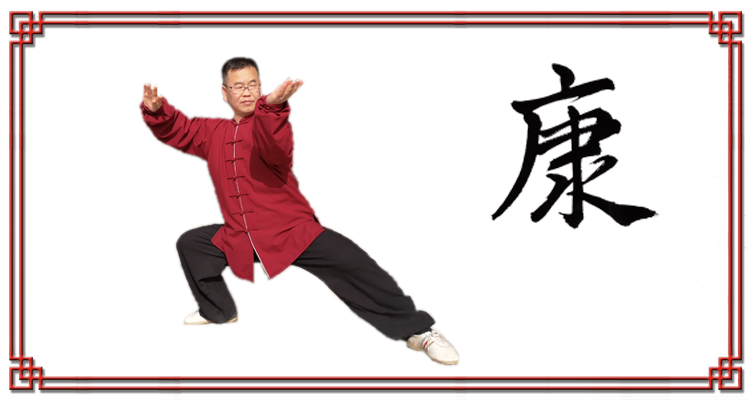
The Chen style has movements that the other styles do not have, such as jumping, clearing, traps, kicks, and more.
In addition, these possess not only hand forms, but also traditional weapons, such as single knives, double knives, single sword, double sword, pear flower rifle (spear with a spark ignition from ground pear grains), white crowbar (spear), spring and autumn sword, long pole and many other traditional weapons ,
The training is not only for self-defense, but also for strengthening the body and mind. Regular training also has a positive and healthy effect on the entire body. One even speaks of a life extension.
You can start training at any age.
According to martial arts historian Tang, Hao, Chenjiagou hand mold was derived from Chen, Wangting (circa 1600-1680) from Chenjiagou, Wen County, Henan Province, in the late Ming and early Qing dynasties, and has since been passed down from generation to generation. This was handed down to the male followers within the Chen family only. Therefore, outsiders had no way to take a look at it. In addition, it is even more difficult to recognize and understand the essence. It was not until Chen, Changxing (1771-1853) had taught the form of Yang, Luchan (now 1799-1872) from Guangping, Hebei (now Yongnian), that the opportunity arose for the outside world to see "Chenjiagou's hand form". Tang Hao further concluded that "Chenjiagou Boxing" gradually developed into "Chen's Taijiquan".
Later Taijiquan was divided into five main schools and developed further: Yang, Wú, Wǔ, Sun and Zhaobao.
Chen style Taijiquan is divided into old and new frames. The old frame was created by Chen Wanging from Chenjiagou, Wen County, Henan Province in the early Qing Dynasty. The old frame has a total of seven shapes, and nowadays only the first and second forms, called cannons, exist. During the time of Emperor Daoguang and Emperor Xianfeng, Chen Youben, a pupil of Chen Wangtings, removed some of the difficult elements from the old frame and re-assembled them into what is today known Chen-style forms. His student Chen Qingping created another form - "Zhaobao Frame" based on Chen Youben's form. There is no essential difference between the old and the new framework. The main difference is that the old frame moves into a larger circle and the new frame into a smaller arc circle. Therefore, Chenjiagou called the old frame also "great circle frame" and the new frame "small circle frame".
This frame is one of the large frame groups that Chen Changxing, the 14th generation of the Chen family, has transmitted, summarized, and choreographed from the forms of his family. The Spin Silk Movement is the essence of an axis in the old frame. This goes through the entire frame. The old frame is primitive and straightforward. The style of the first form is gentle. It serves as the main practice and foundation of Chen-style Taijiquan. Therefore, some people call the first form as a basic form or exercise. With a certain foundation you can then start to learn the second form. The second form, also known as cannon form, is more powerful. With understanding, skill and looseness from the first form, the flexibility, elasticity, and shaking of the second form is better played out.
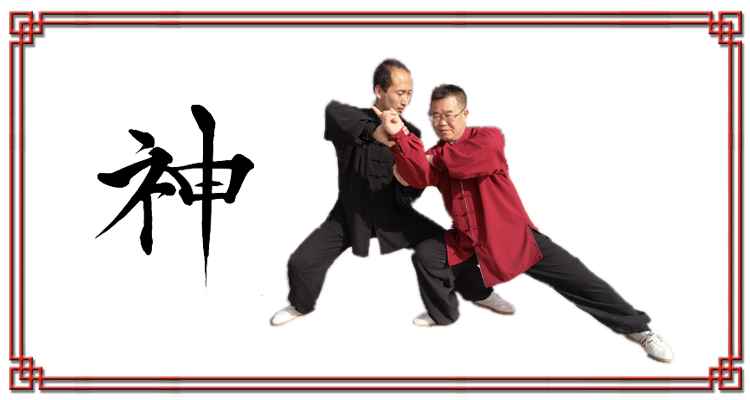
This frame was originally called a new frame. After the frames designed by Chen Fake had been circulated, these frames were referred to as small frames. The small frame was created by Chen Youben, the 14th generation of the Chen family. Instead of exerting the power to the outside, this frame keeps the energy inside. The whole frame is gentle and elegant in the style of Confucianism.
This is also part of the large frame series, which was edited by Chen Fake from the old frame. Chen Fake came from the 17th generation of the Chen family. This frame was later designed by Chen Zhaokui as the new frame. The new framework particularly emphasizes the movement of "silk spinning". This is characterized by its flexibility, looseness and chest-waist movement, as well as turning and bowing.
Chen-style Taiji also contains a number of forms with equipment, including: single sword, double sword, single sword, double sword, double puppet, rifle, sword, pole and so on.
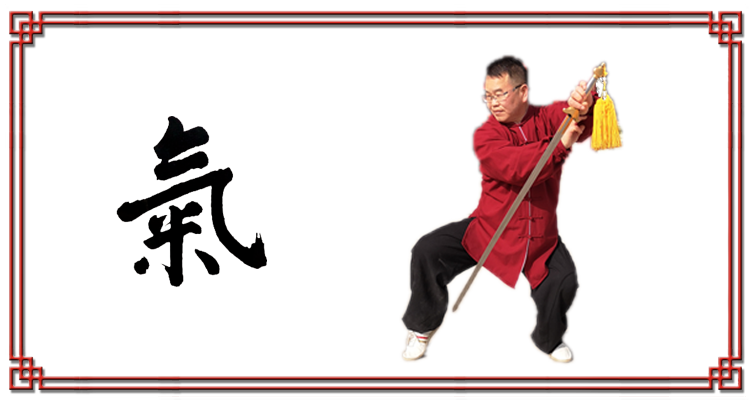
The Chen-style Taiji sword was developed on the basis of Chen-style Taijiquan. The basic technical principles of Chen-style Taijiquan also apply to the Chen-style Taiji sword.
The traditional Taiji sword in the Chen style is the 63 form. The movements are varied, including chopping, stinging, hanging, puncturing, parrying, wiping, cutting, props, etc.
The bondage of strength and gentleness, speed and slowness. With a sword on the body, flexible and changeable, the path of movement is winding and winding, the style is unique and has a high value for physical fitness.
Tai Chi Chuan has been handed down from generation to generation in Chen Jiagou since the founding of Chen, Wangting. The seven types of hand shapes designed by Chen, Wangting have been simplified from Extensive back. The original 108 long hand form, the second and fifth Taijiformen are hardly represented in Chenjiagou. Instead, the first form and cannon form (the second form of modern Chen-style Taijiquan), the pushing hands are always refined. Until the time of Chen, Changxing, and Chen, Youben (14th generation), the first form was divided into the old and new frames to accommodate different learning objects.
The new frame is thought to have been developed by Chen, Youben. The style of the movement is as big and wide as the old frame. He has gradually dropped some difficult moves. Chenjiagou called it "simplified (so that the sense is not lost)". Chen, Youping, the disciple of Chen, Youben, also developed a frame, his movement is small and compact. The movements are very slow. The should be gradually increased if one is practiced. Without fundamentally changing the form, it goes from simply too complex to extremely complex, and the difficulty of the technique is gradually increased. Chen, Changxing, lived at the same time as Chen, Youben in Chen Jiagou, lived the system of his ancestors, with great movements and difficult technique, until he taught his student Yang, Luchan in Beijing Taiji. The movements were gradually changed and adapted, which later became Taijiquan shaped in Yang style. Later, the Wu style Taijiquan was derived from the Yang style, and its founder was Wu Jianquan.
Wu, Yuxiang, from the Yongnian region, first learned the old Chen-style frame from Yang, Luchan and then the new frame from Chen, Qingping. He then developed a new style that became Taijiquan in Wu style. Wu style Sun style was derived, whose founder was Sun, Lutang.